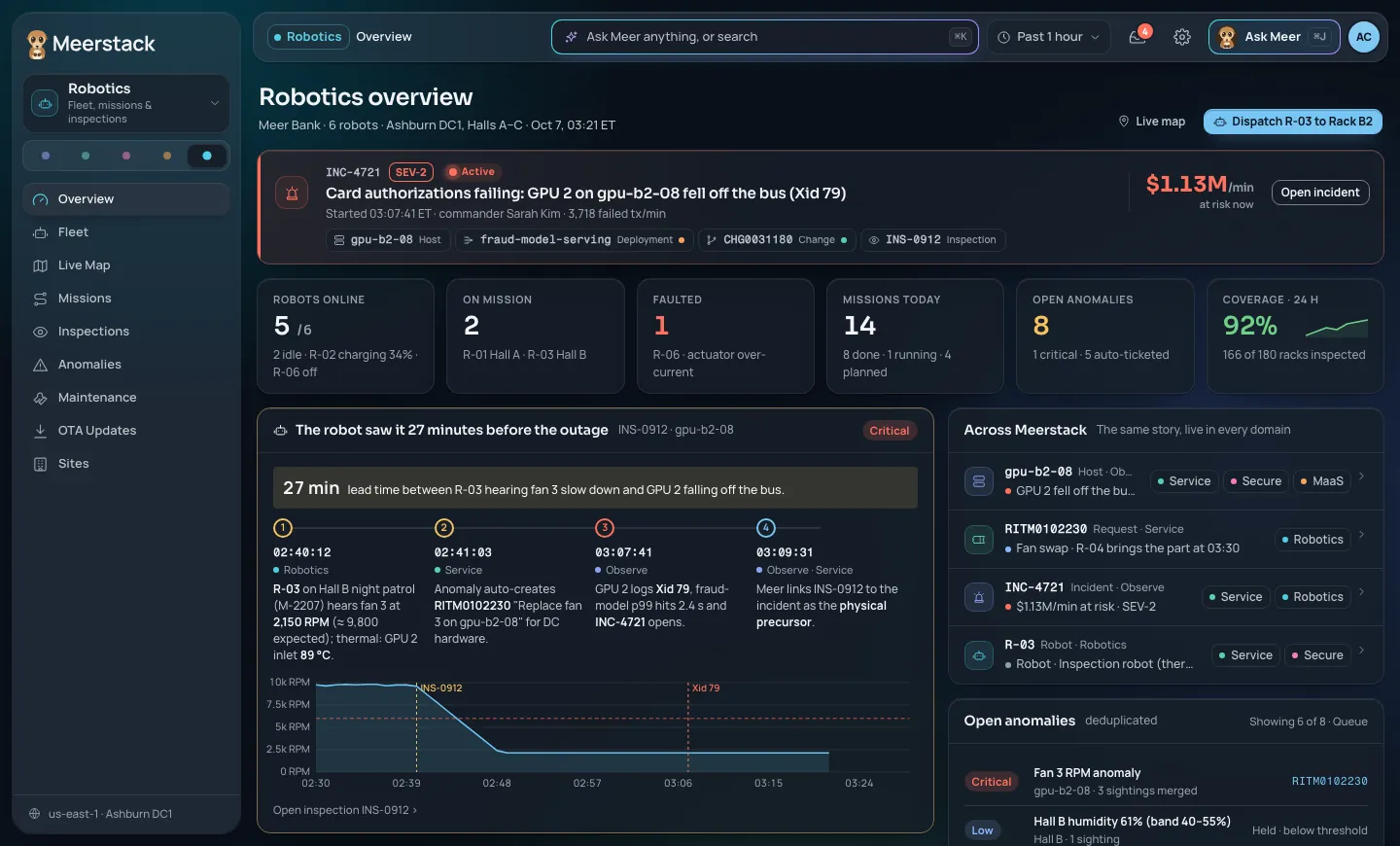
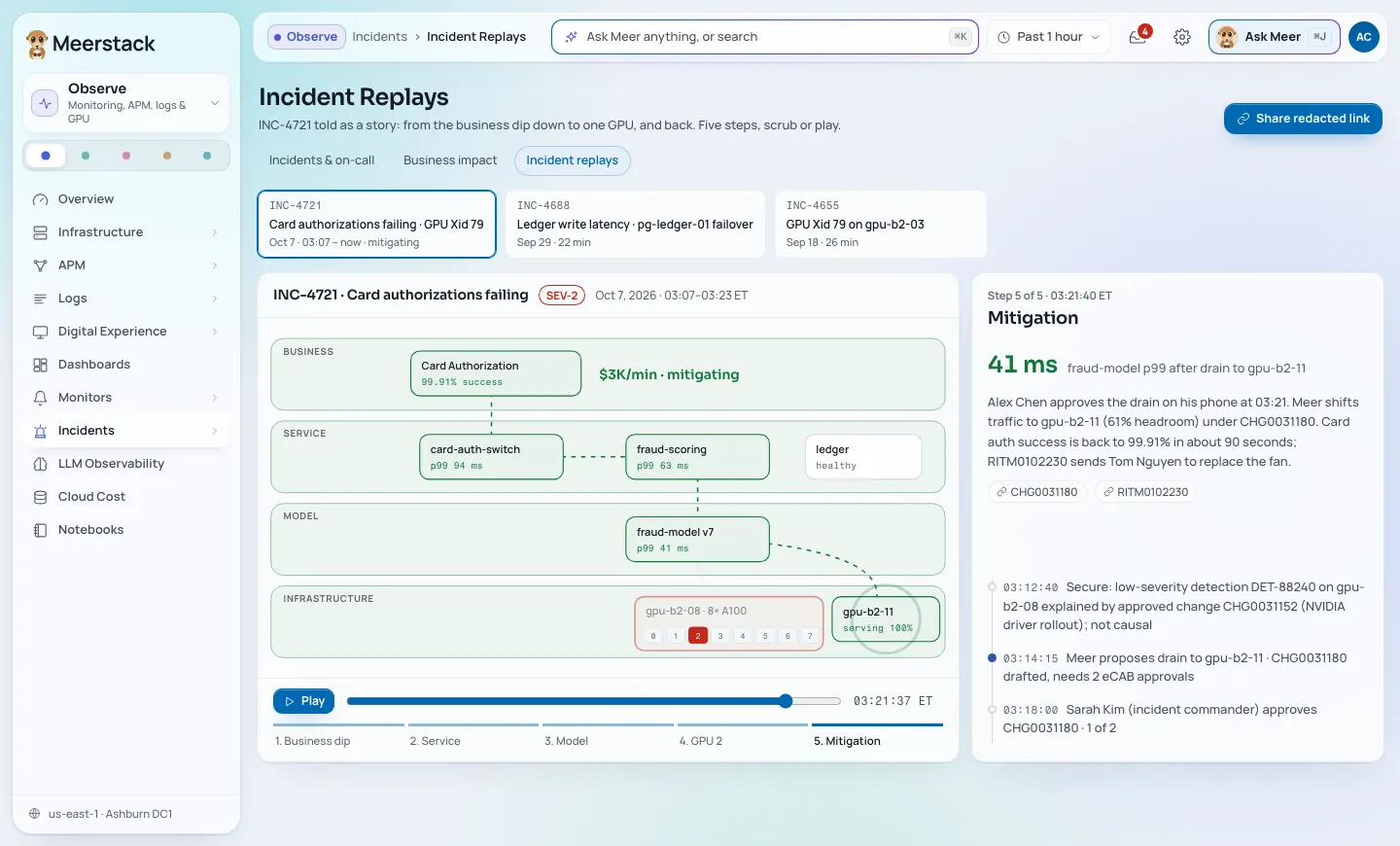
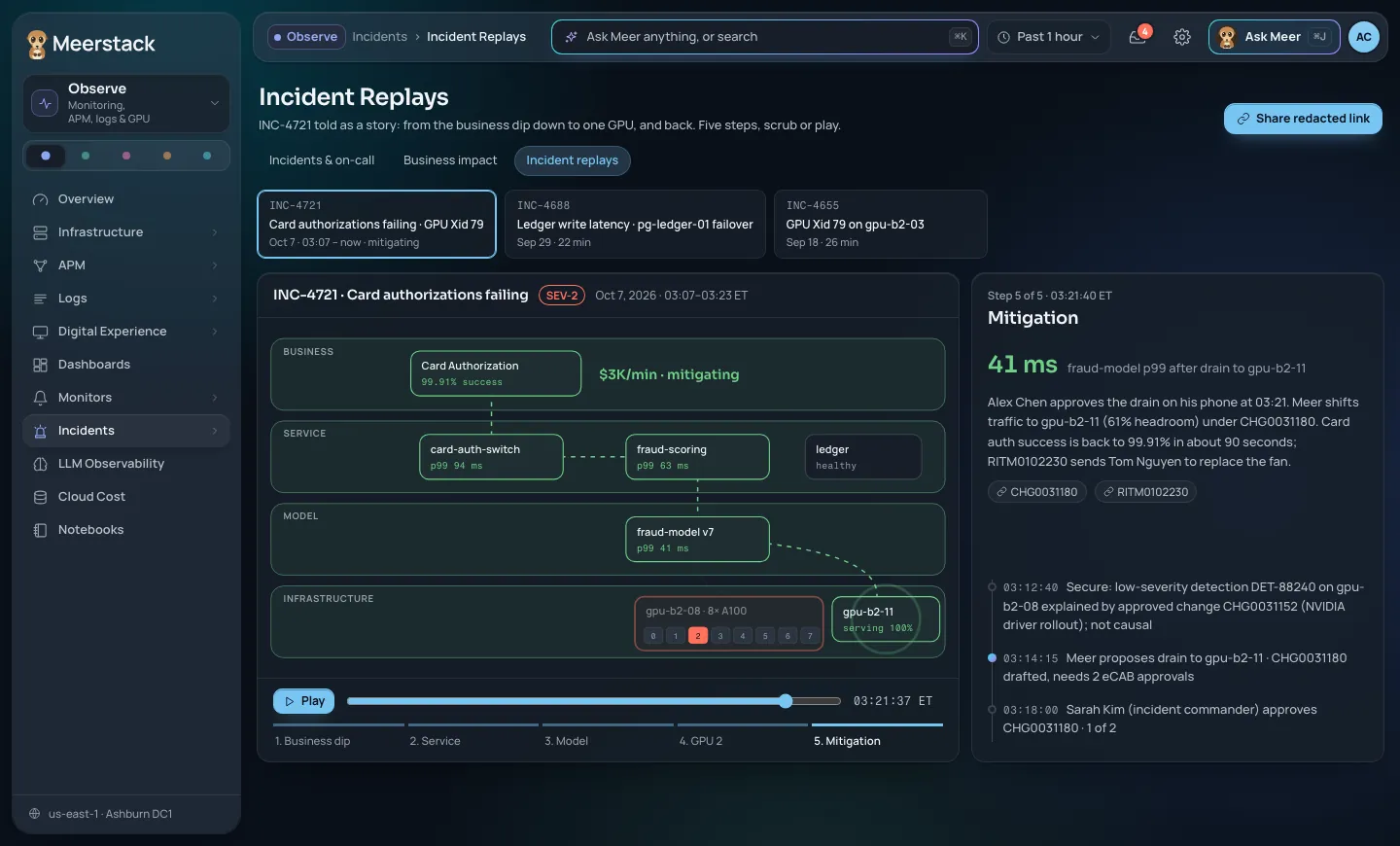
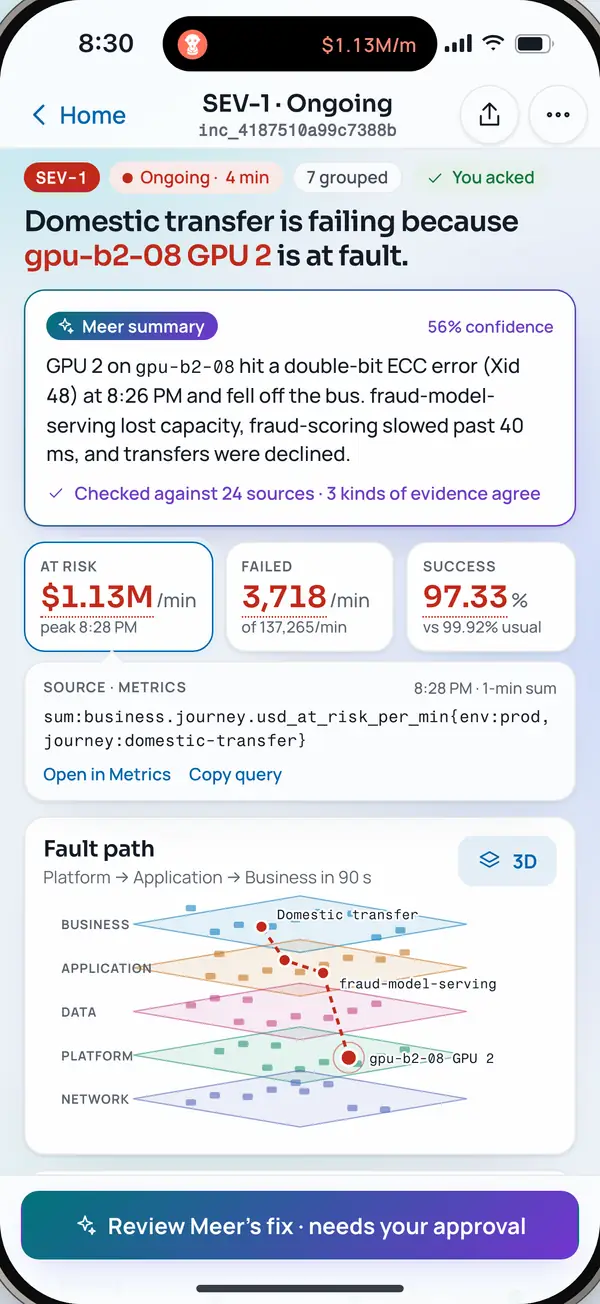
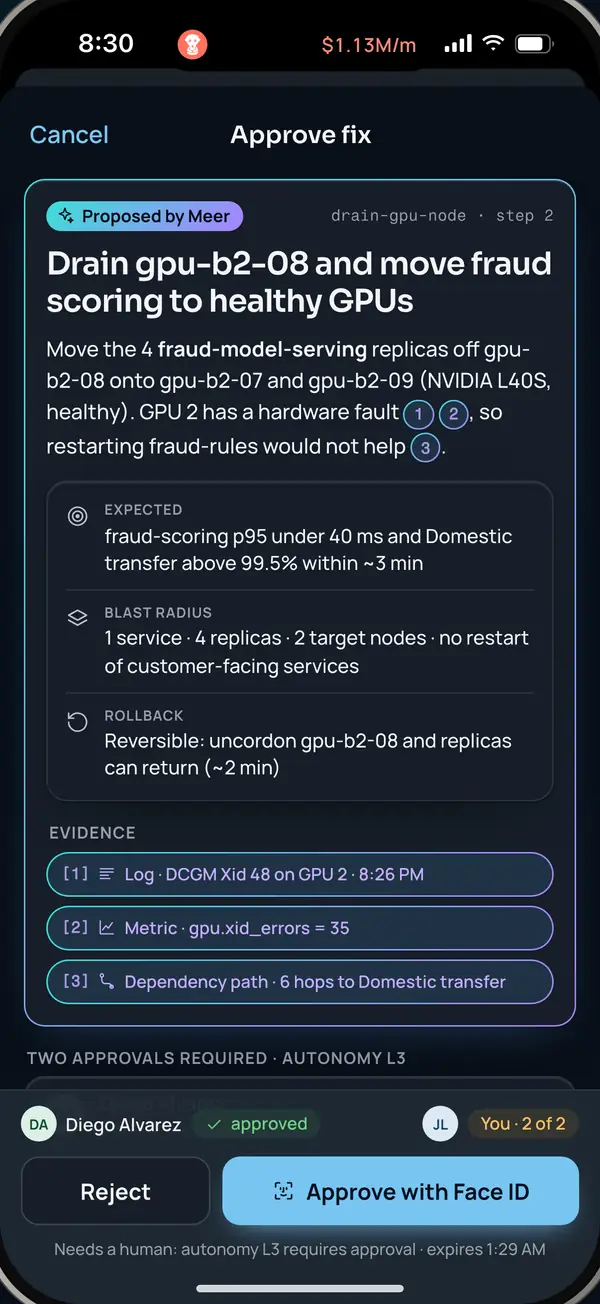
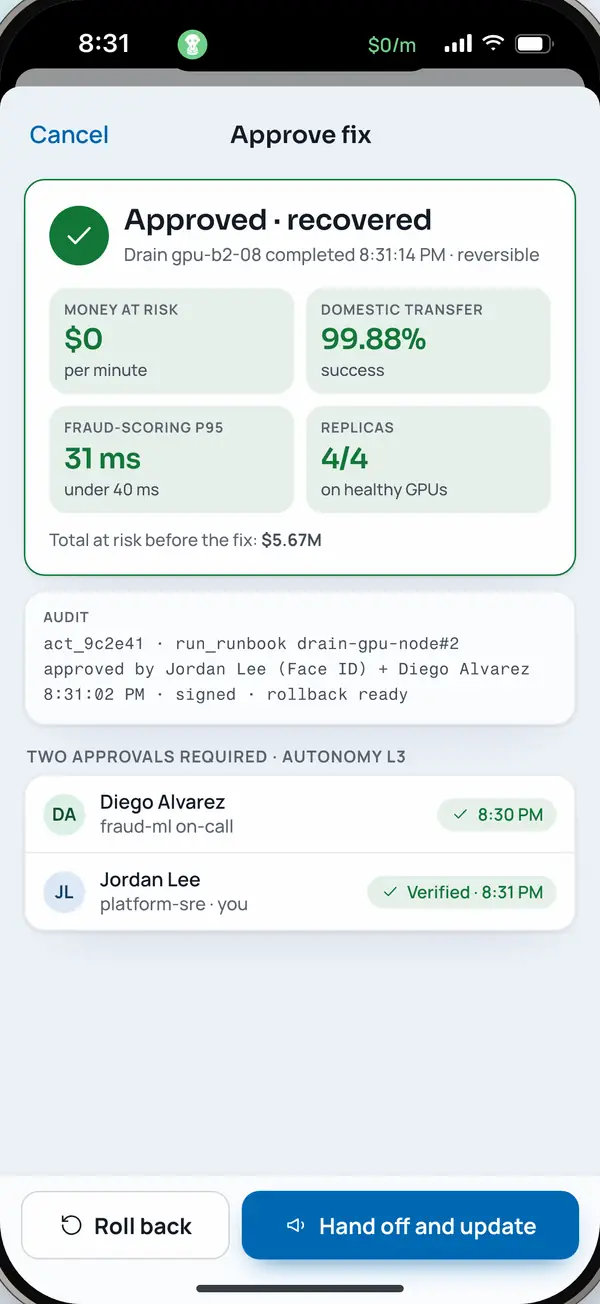
gpu-b2-08 dropped off the bus. Draining the host to gpu-b2-11 is reversible and should restore the journey.- log · Xid 79 on GPU 2
- metric · fraud-model p99
- path · journey → GPU
MeerStack brings monitoring, service management, security, models and robots onto one object graph. Each section below shows what you would expect from a dedicated tool, what those tools leave out and what is new. We mark what is still in development.
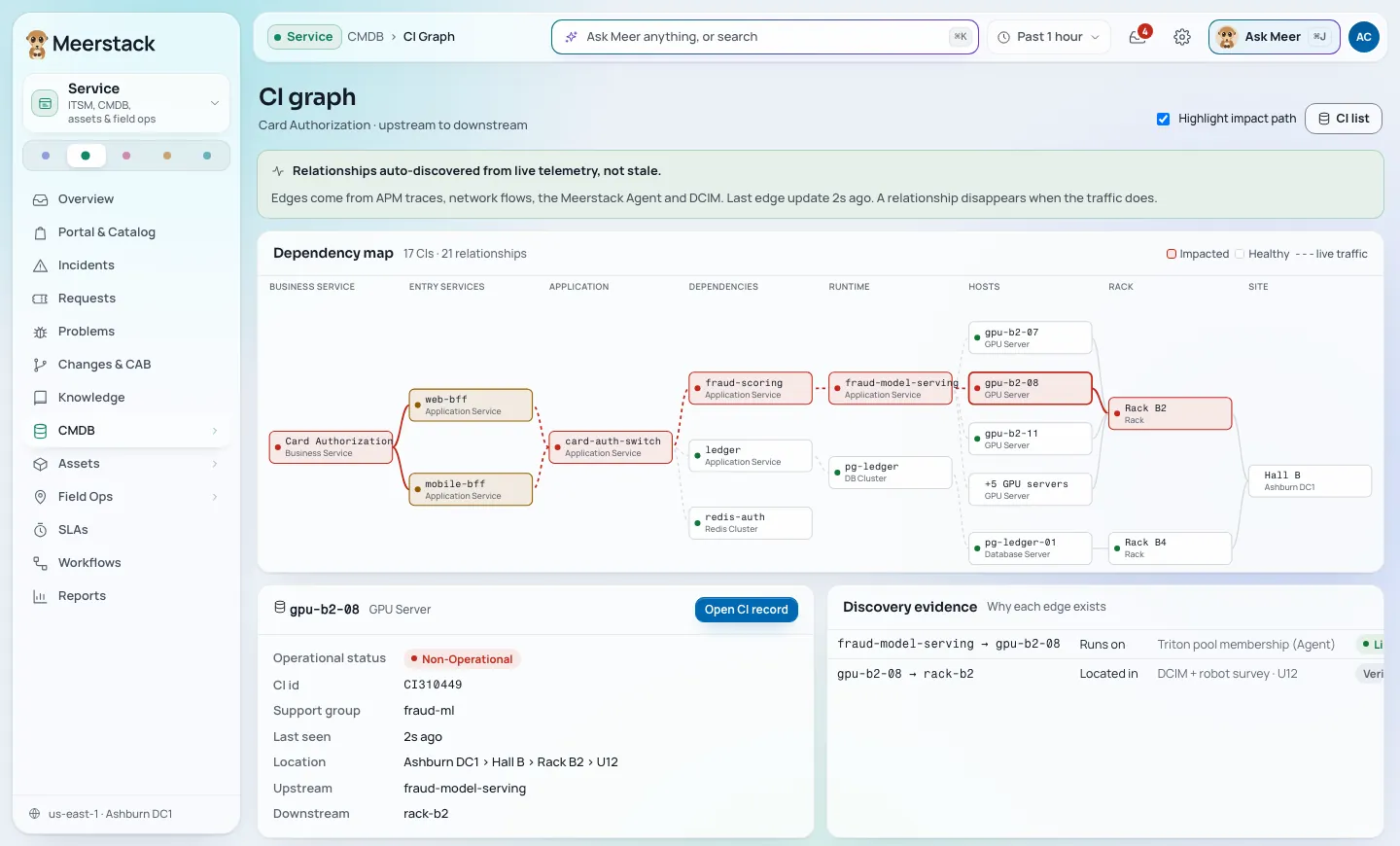
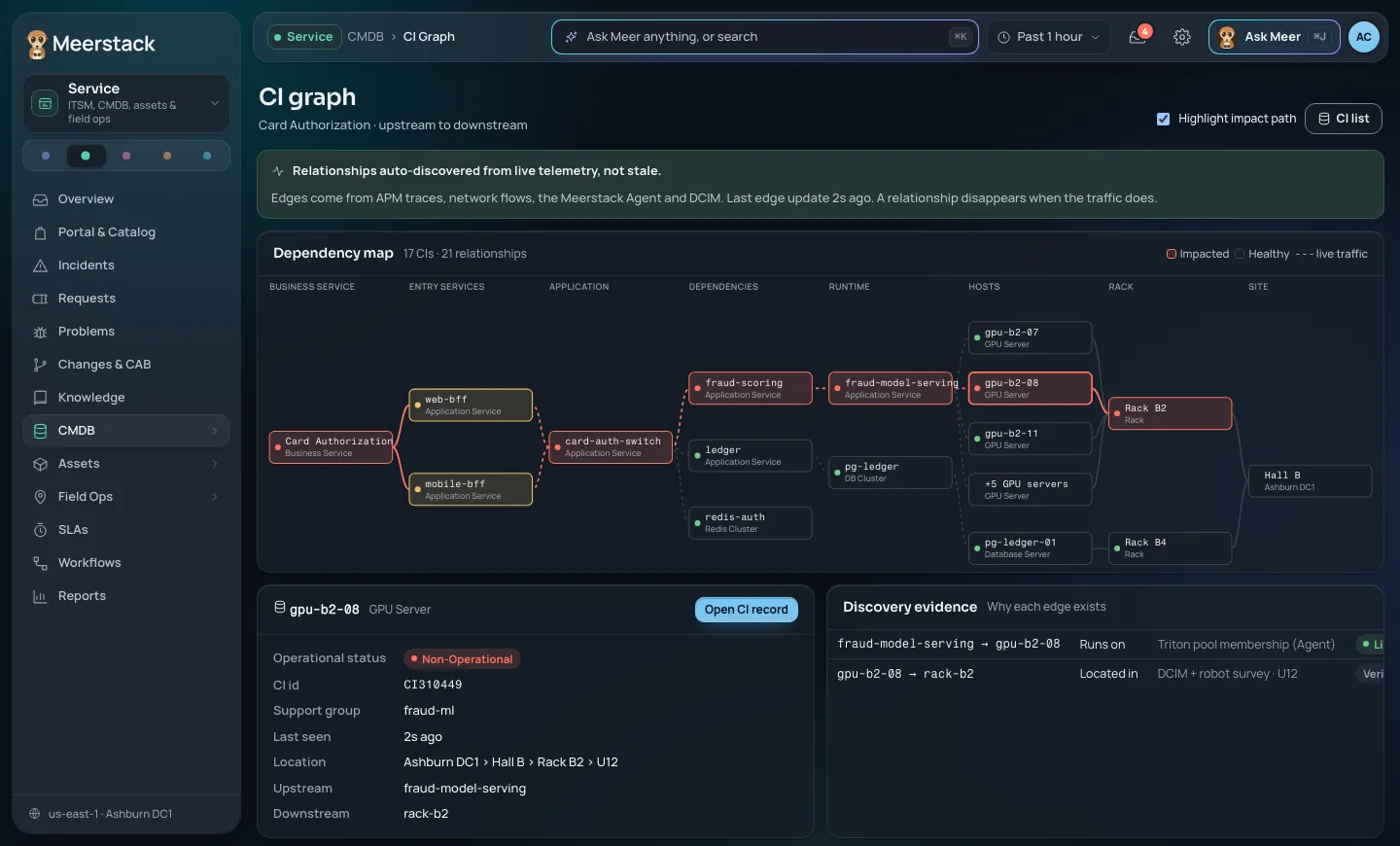
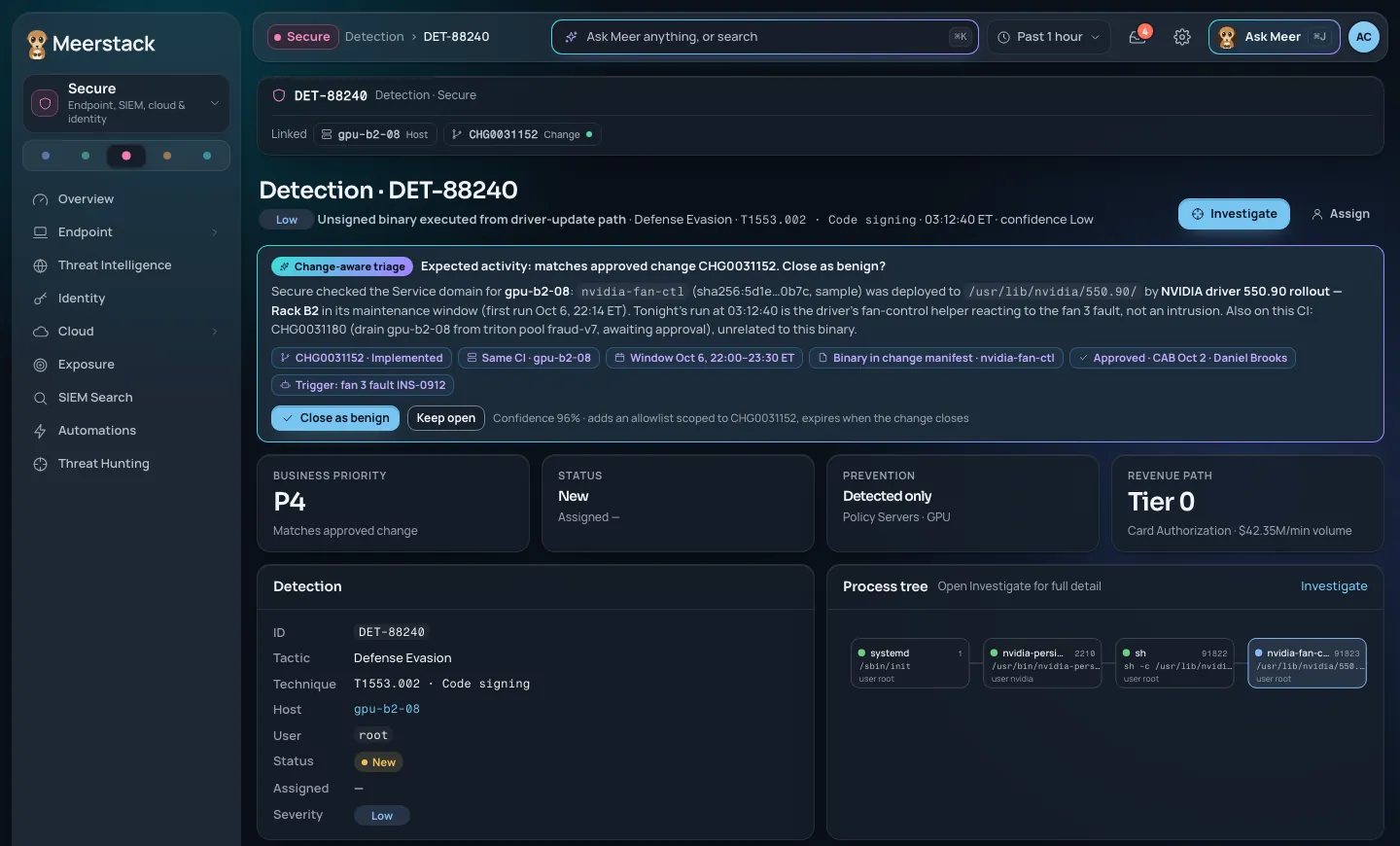
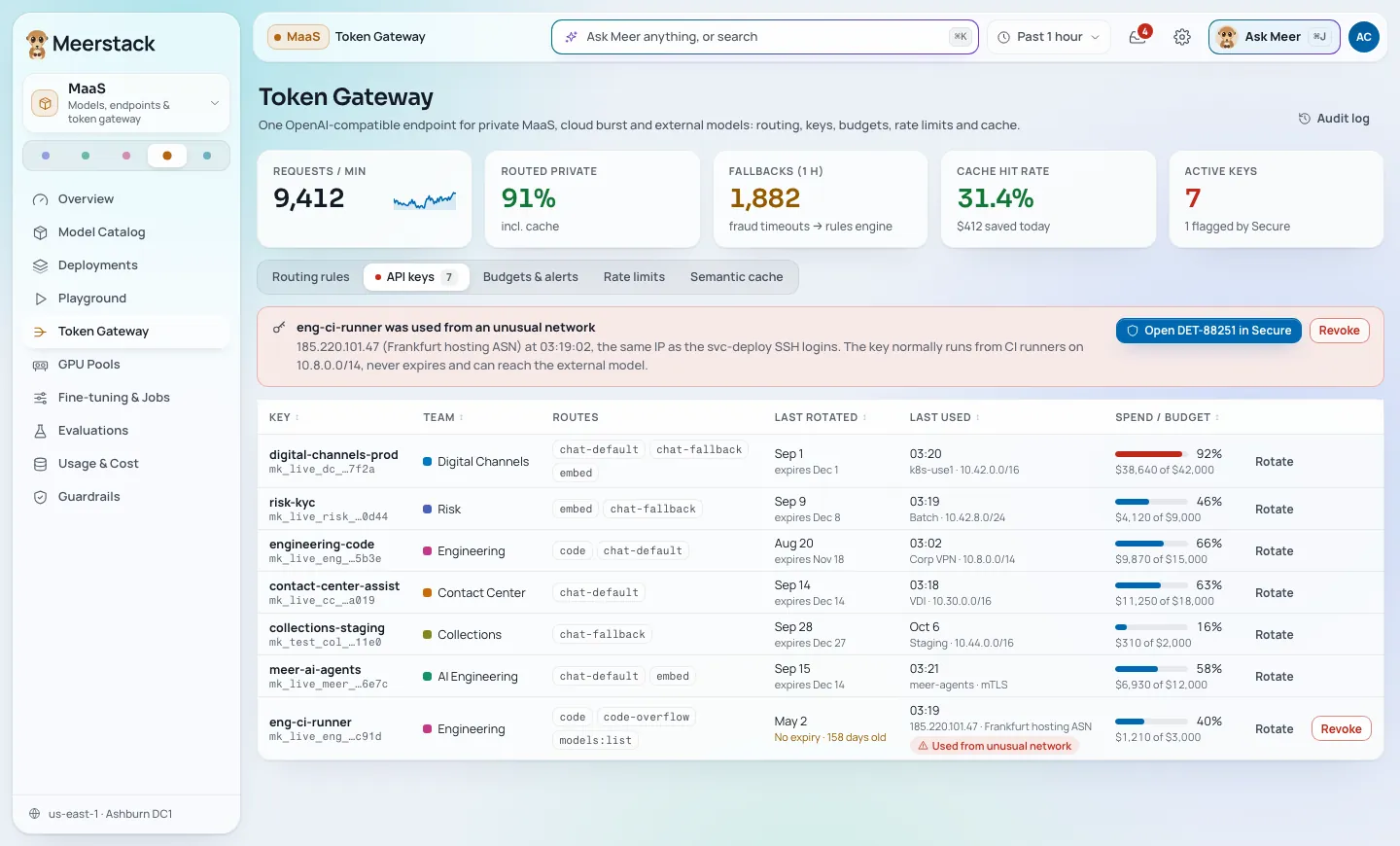
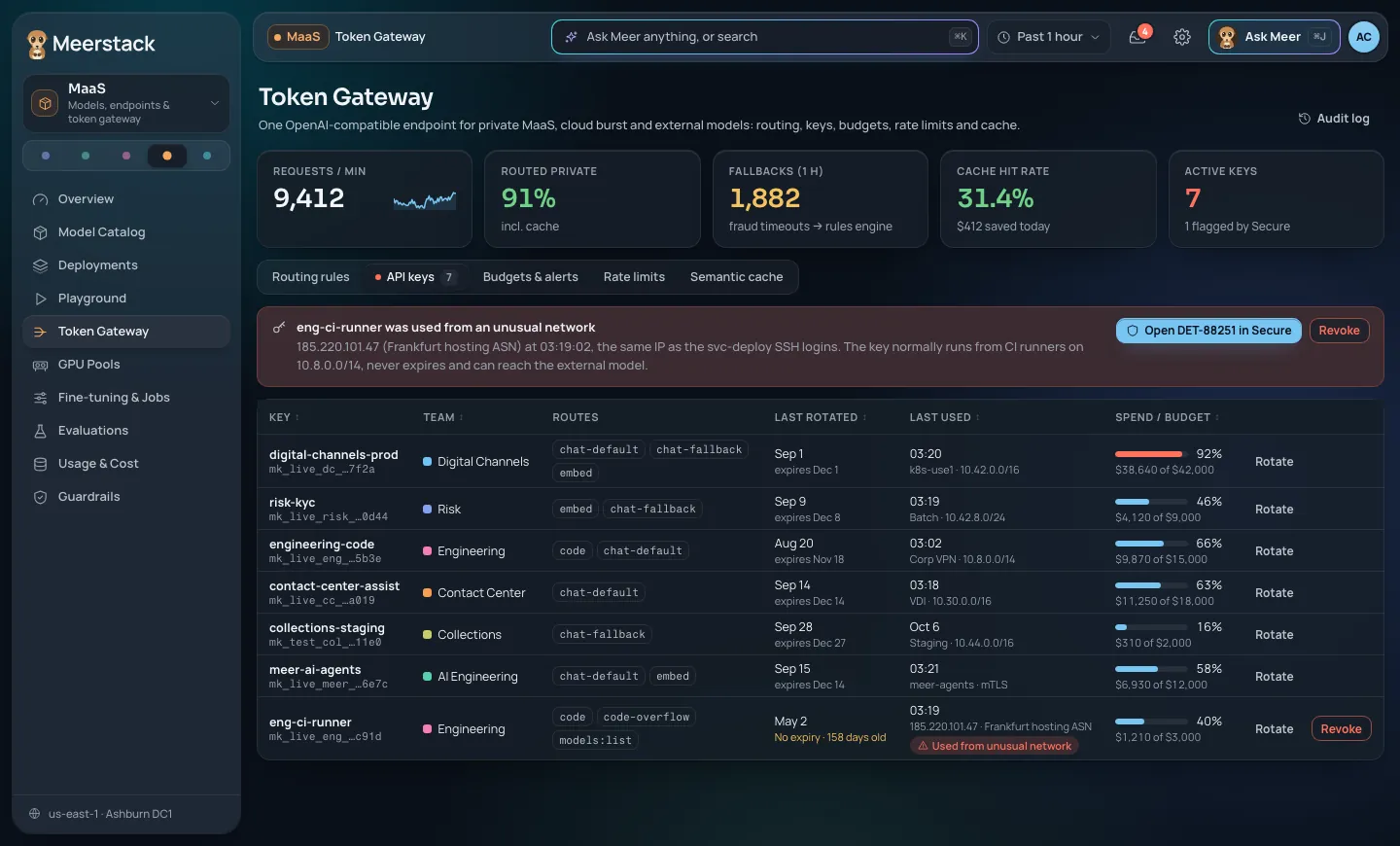
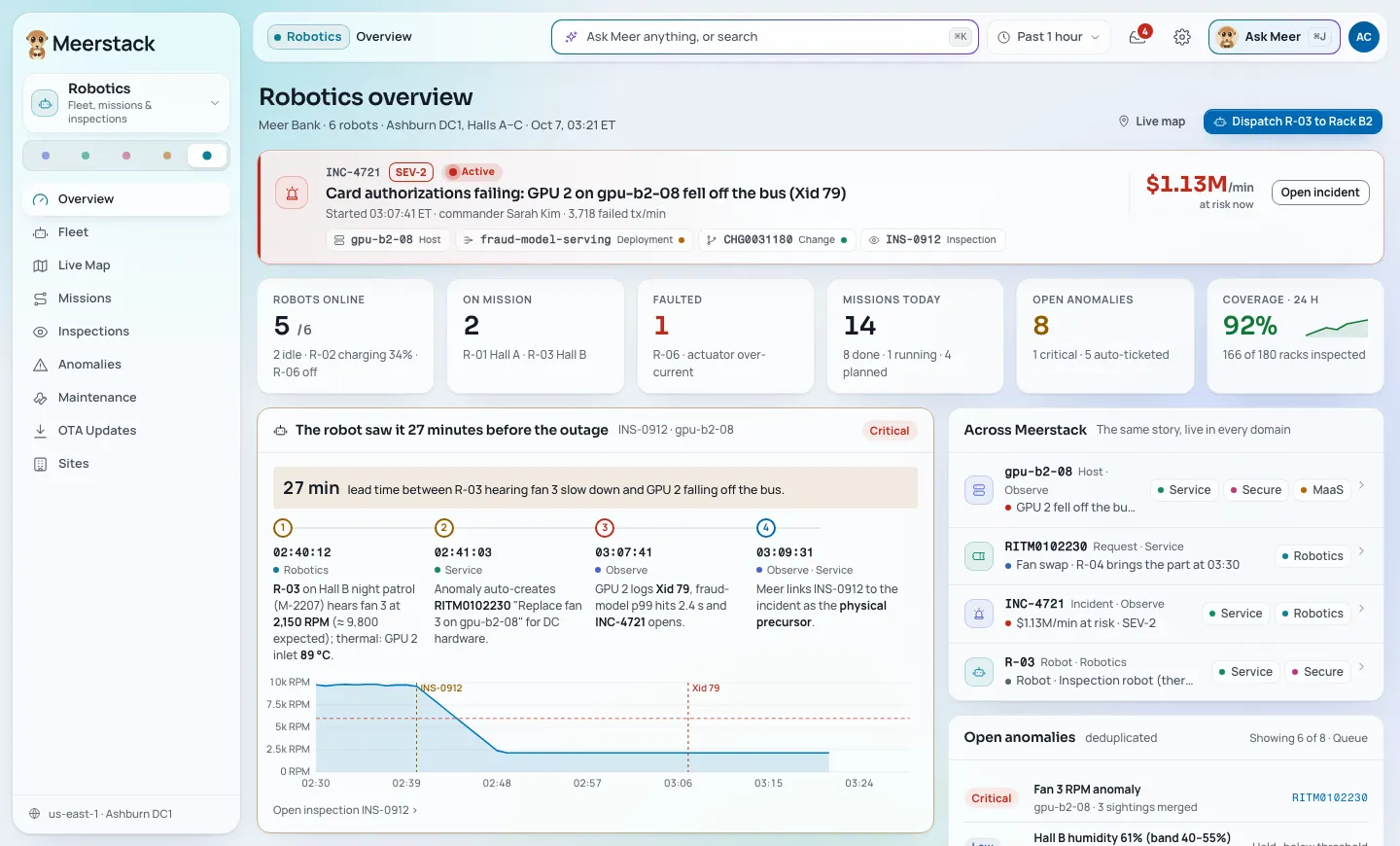
One object graph. Business journeys, services, hosts, databases and GPUs are registered as linked objects. An incident starts at the journey that is failing and follows the links down to the part that broke.
Sample data from Meer Bank, a fictional bank we use for demos.
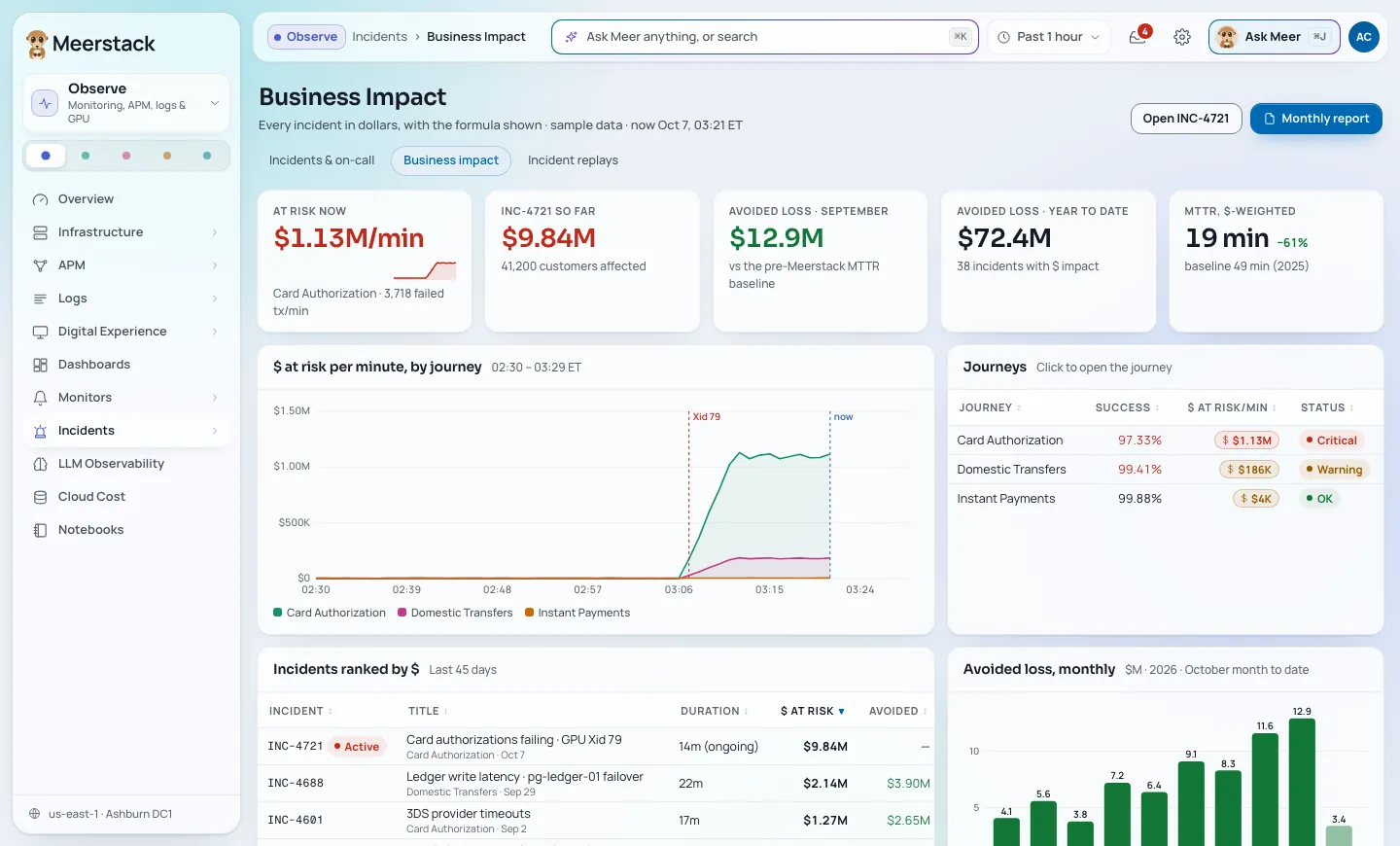
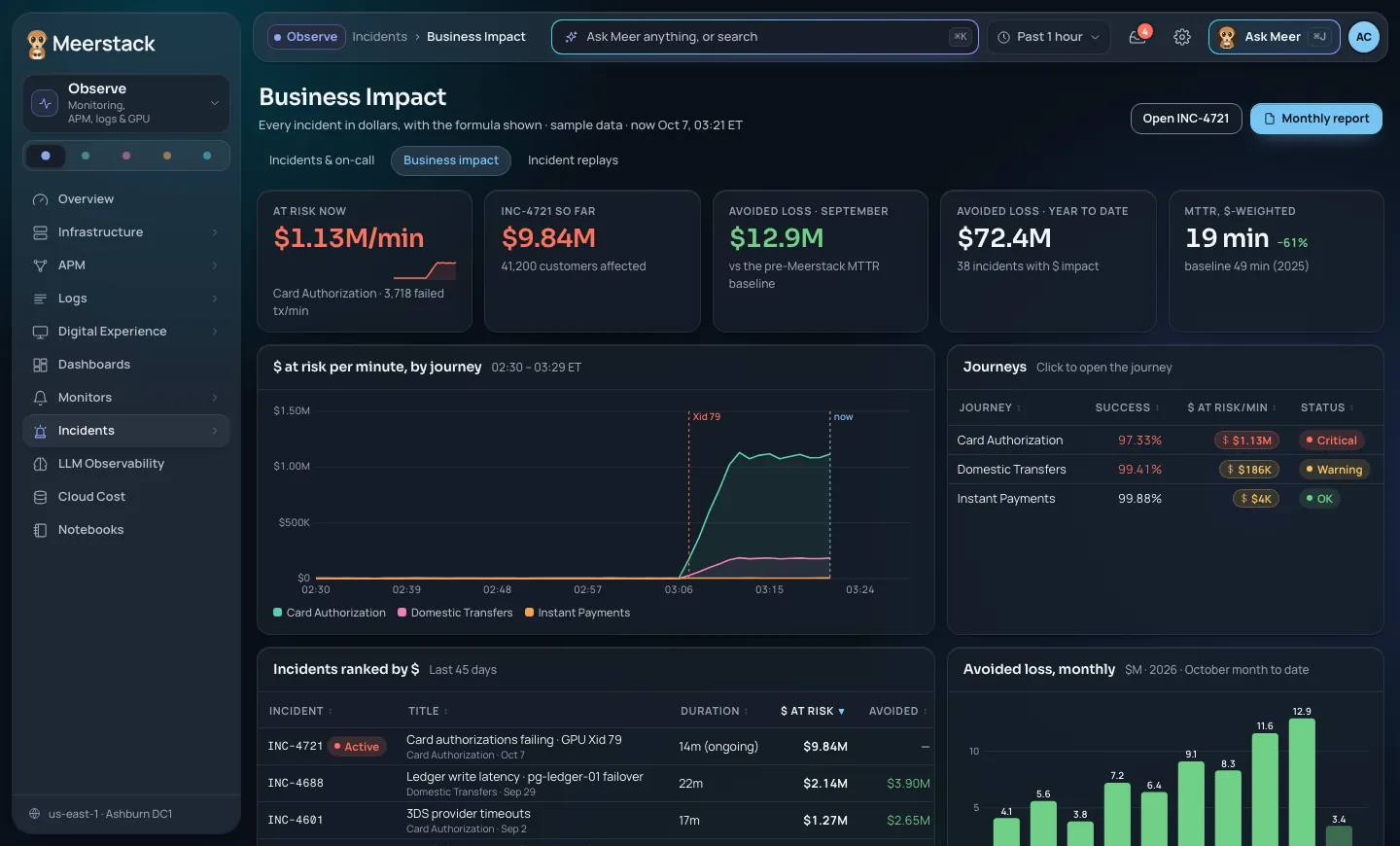
Metrics, logs, dashboards and monitors, compatible with the agents you already run. Every incident on a business journey shows the dollars at risk per minute.


Schedules, escalations and paging run on the same objects as your monitors, so the person paged sees the service, the host and the change in one place.


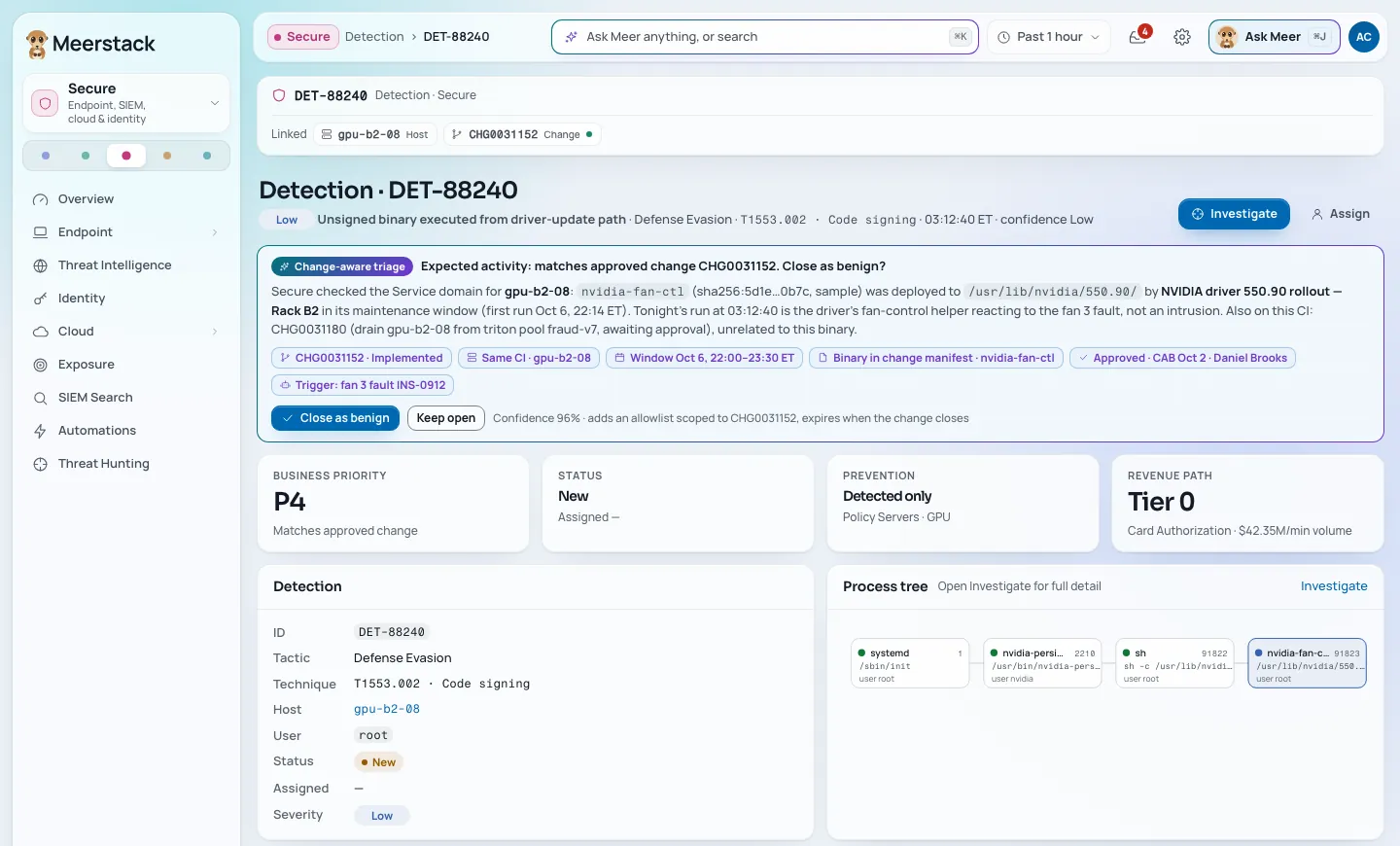
Security operations is the newest domain. What ships today protects the agent fleet itself; detections and triage are in development.


GPUs and the models they serve sit on the same graph as everything else. A failing GPU shows up as a failing journey, priced, with a GPU-specific fix.


Robots, missions and their findings become objects on the graph, next to the hosts, racks and incidents they relate to.


Meer reads metrics, logs, topology and changes, cites its evidence and writes a fix you can roll back. The approval rules are enforced in code, not in a prompt.
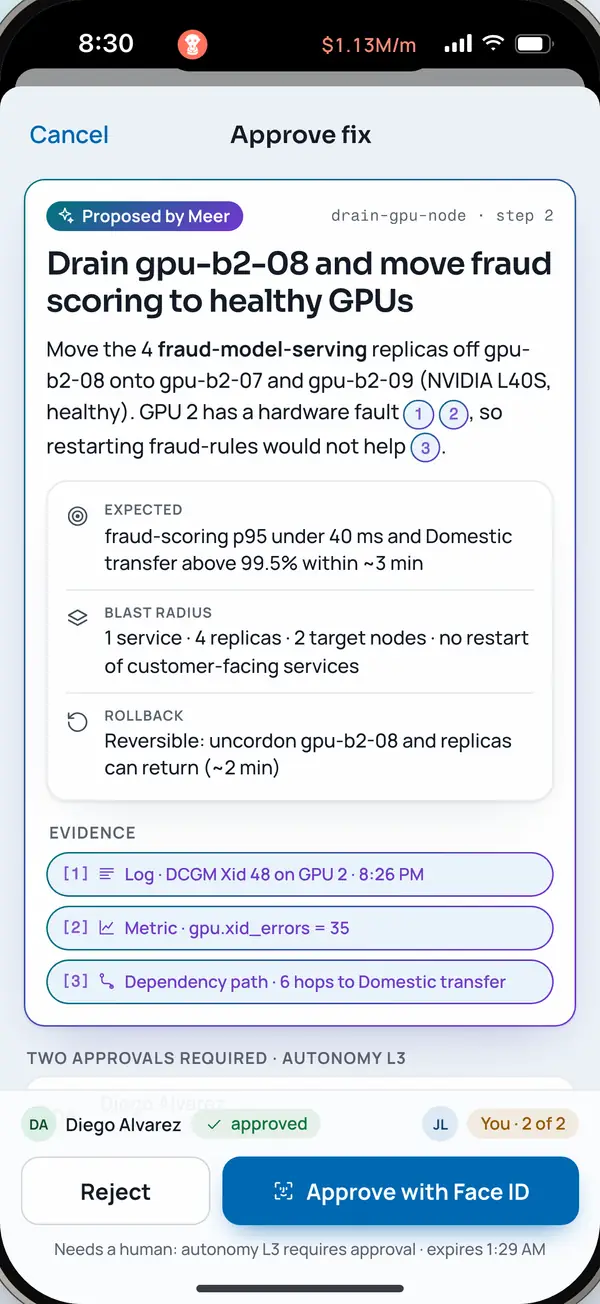
gpu-b2-08 dropped off the bus. Draining the host to gpu-b2-11 is reversible and should restore the journey.

A causal-graph ranking and a language model work together. Each hypothesis carries its evidence and a confidence score, and runs on live data.
Meer proposes an action with its blast radius. Actions can be rolled back, and a rollback is refused if the object changed since.
You set an autonomy level for each action, from L0 to L3. High-risk actions become proposals that a person must approve, in the console or in Slack. Meer can never approve, and approval policies can require two different people.
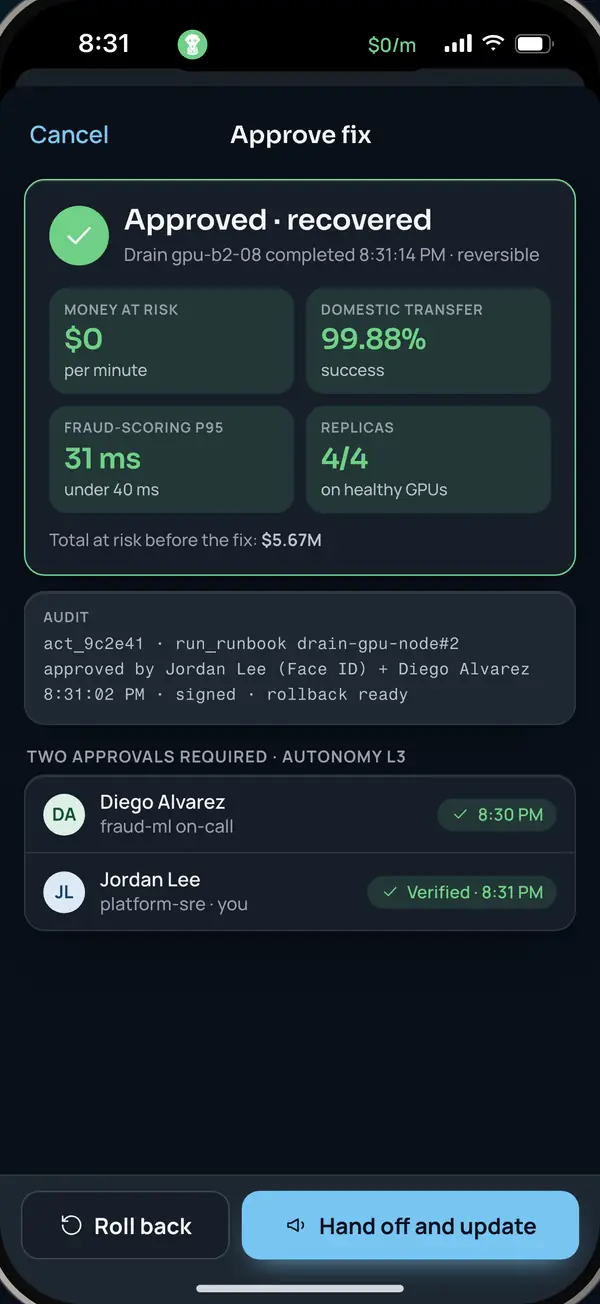
Every action is logged with who asked, who approved and what changed. Other AI agents get the same tools and the same limits over MCP.
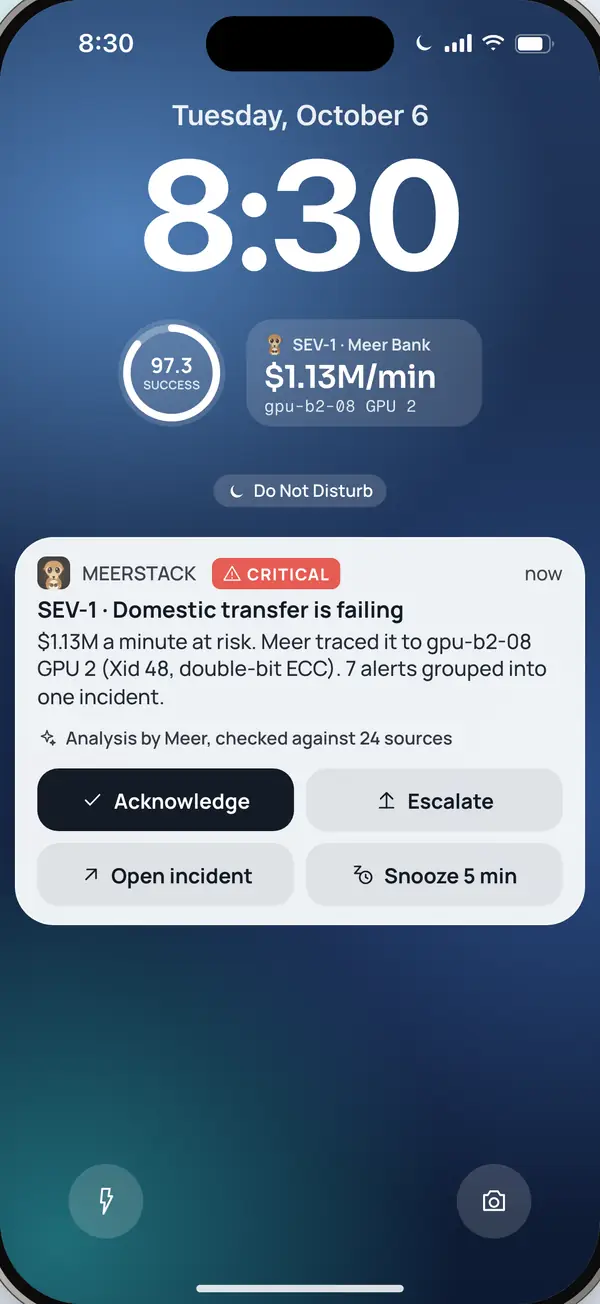
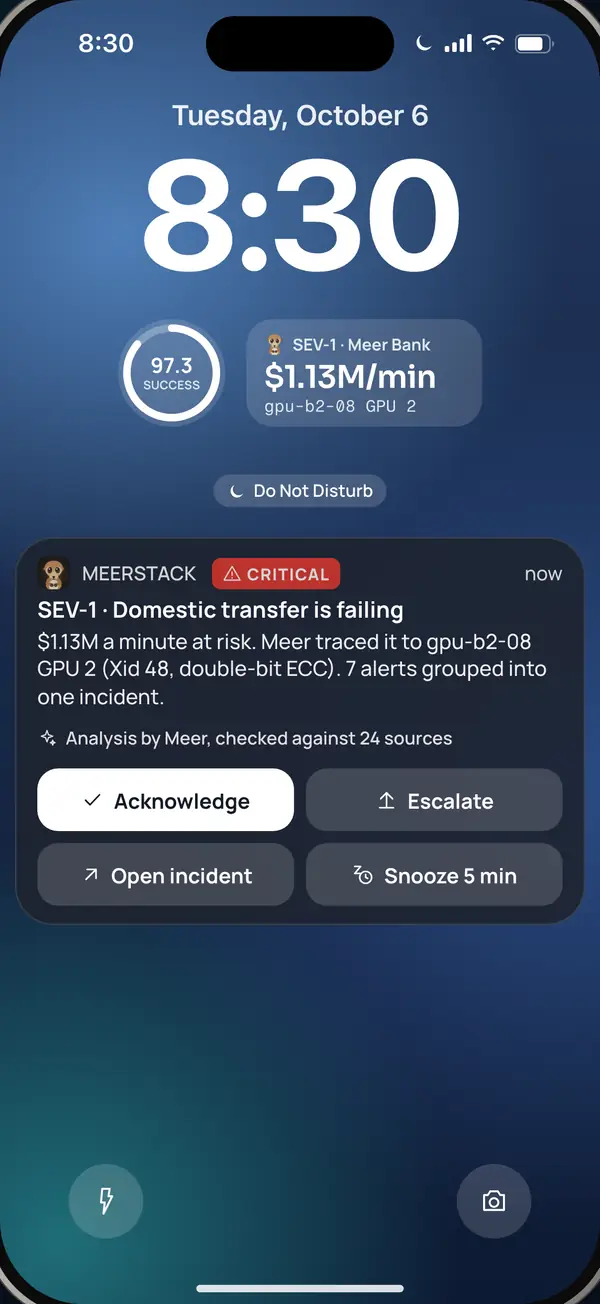
The MeerStack app for iOS and Android is in development. Paging already works: you get a push and can acknowledge or escalate from the notification. Approving a fix with Face ID is next. The clickable 90-second demo shows the full flow.


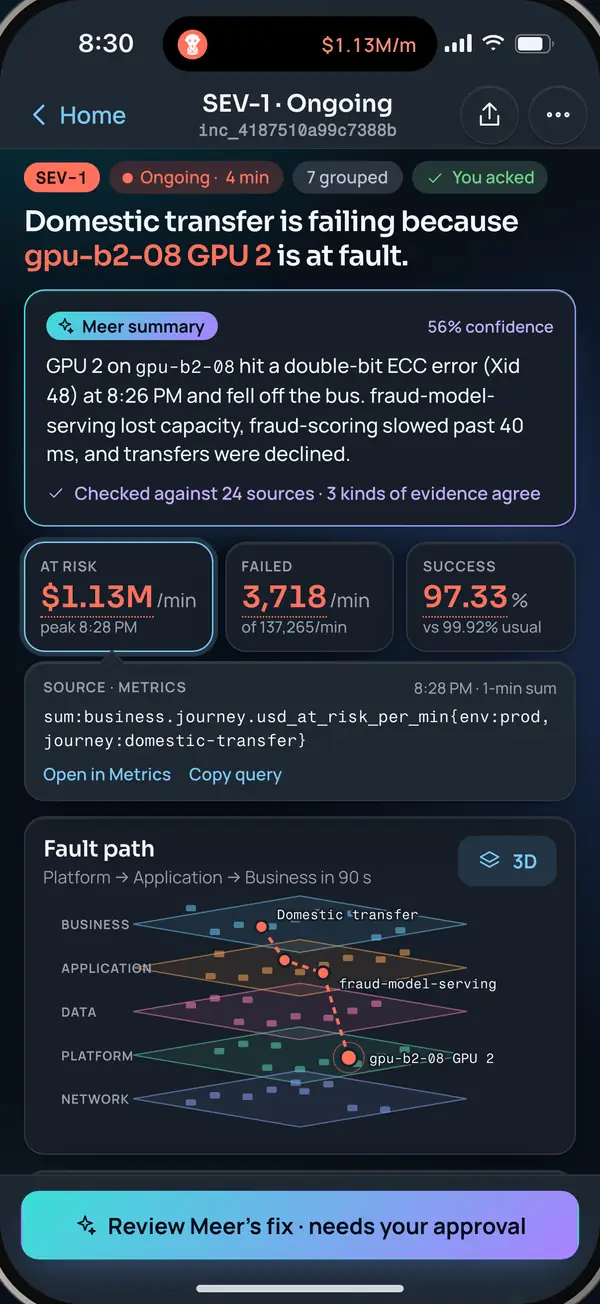
Phone screens are from the clickable demo: a prototype with sample data. Timings are the demo script, not a measurement.
Click through the 90-second demo, or spend 20 minutes with a founder.